Author: darleneweecare

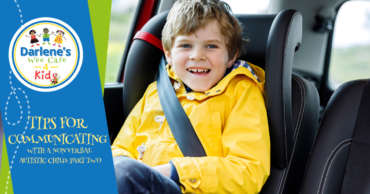
  • Tips for Communicating with a Nonverbal Autistic Child: Part Two

    Tips for Communicating with a Nonverbal Autistic Child: Part Two

    We recently took a look at some ways that you can encourage communication for a nonverbal autistic child. In that post, we discussed how play, social interaction, imitation of your child’s sounds and behaviors, nonverbal communication cues, and giving them enough room to respond can help the development of communication skills. Today, we’ll be completing this two-part look at how you can help develop your child’s communication skills. If you’re in need of childcare for your special needs child, call Darlene’s Wee Care 4 Kids.

    -Simplify Your Communication

    When you make your vocabulary minimal and simplified, it not only makes it easier for your child to understand, it also makes it easier for them to imitate that speech. If your child is nonverbal, keep it to single words (i.e. if they’re playing with a ball, say “ball” or “roll”). If they have begun to speak in single words, you can increase it to a short, two-word phrase (i.e. “throw ball” or “roll ball”). Keep the “one-up” rule in mind, where you use phrases with one more word than they are using. As they gain understanding, they’ll pick more words and phrases up and their communication skills can develop.

    -Follow What They’re Interested In

    Instead of steering your child’s focus away from something that has their interest, follow along by narrating their actions. Stick to the “one-up” rule with this as you describe their actions. The verbalization of what they’re doing allows them to make the connection to their actions with their corresponding names. Learning the vocabulary associated with something they enjoy and are interested in allows them to make connections easier than if they are presented with new actions and words all at once. That can cause them to retreat inwards, avoiding communication and interaction on the whole.

    -Consider Devices and Visual Supports

    There are many types of devices and visual supports available that can help facilitate communication while fostering the development of speech skills. For example, there are some devices and apps with pictures that produce words when your child touches them. Not only does that help a nonverbal child communicate, having a visual representation of the word they are attempting to say, combined with the audio of the word playing in direct connection to them, it can help them learn the vocabulary and how to vocalize what they are hoping to say.

    While the strategies we’ve discussed in this two-part series have been successful for many parents with nonverbal and/or autistic children, it’s important to remember that every child is different. Something that may be successful for one person might not land with your child. Discuss with your child’s therapist strategies you’ve tried, what they connect with, and what they reject. They’ll be able to provide further advice depending on what is successful and what difficulties your child may be encountering. While it is a difficult situation, it’s vital to show patience to allow your child to develop at their own pace.
    If you are in the Upper Darby area and you’re looking for childcare for your special needs child, call Darlene’s Wee Care 4 Kids. We’re here to help!

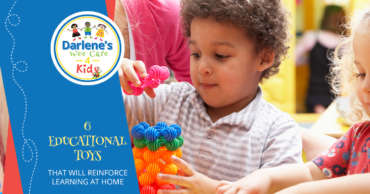
  • Tips for Communicating with a Nonverbal Autistic Child: Part One

    Tips for Communicating with a Nonverbal Autistic Child: Part One

    Communicating with children can be a difficult task on its own, but it becomes even tougher with a nonverbal autistic child. However, it is possible to not only find ways to effectively communicate with them, you can also help them develop their verbal skills in a way that is comfortable to them. With that being said, it’s important to remember not all autistic children are the same. While one strategy may work perfectly for one situation, that’s not to say it will be right for another. In hopes of improving communication skills, we have put together this list of ways you can help a nonverbal autistic child communicate. If you are in need of childcare that doesn’t leave behind children with special needs, call Darlene’s Wee Care 4 Kids.

    -Play and Social Interaction

    Much of any child’s education comes as a product of playing, including learning language and communication skills. Find games that your child enjoys playing to engage them. Include activities that encourage social interaction, such as singing and reciting nursery rhymes. While you’re interacting with your child, keep yourself in front of them and close to eye level, as that will make it easier for them to see and hear you.

    -Mimic Your Child

    Pay attention to the sounds and behaviors your child makes while interacting. You can help them be more vocal by imitating the sounds they make, while encouraging them to copy you and take turns going back and forth with sounds. Only imitate their behavior when it is a positive action. For instance, if they roll a toy car, you roll yours as well. But, if they throw their car, don’t follow suit. This is an opportunity to show them good behavior first hand.

    -Nonverbal Communication

    Small things like gestures and eye contact can help an autistic child form the foundation for future language and communication skills. Exaggerate your gestures to get your communicate your feelings to them. Use your voice and body while communicating, such as extending your hand and saying the word “look”. Observe your child’s gestures and respond to them in kind. When they see you communicating like this, they will be more likely to use this technique to communicate with you and others.

    -Give Them Space to Talk

    When talking to your child, it is easy to feel like you need to help them along when they don’t respond right away. This can make them more shy about answering since they feel like you’ll answer for them. When you ask them a question, give them ample time to answer while watching expectantly. Keep an eye out for any sounds they make or nonverbal gestures, as this may be the only way they can respond at that time. Then, respond to that gesture promptly to help them establish the flow of communication.

    That wraps up part one of our look at some ways you can help a nonverbal autistic child communicate. We’ll be diving into part two in a couple of weeks, but we hope these strategies help you with your little one. If you’re looking for childcare services in Upper Darby that will give your special needs child the attention and care they deserve, call Darlene’s Wee Care 4 Kids. We’re here to help!
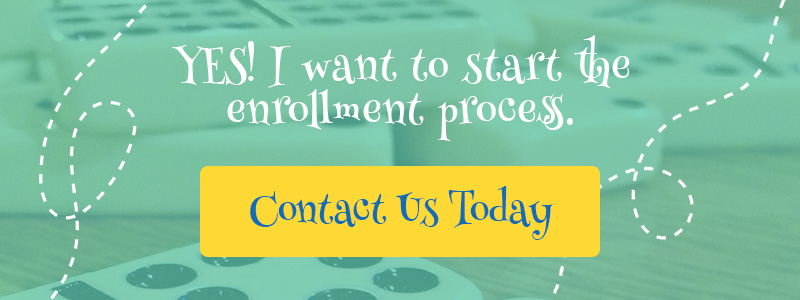
  • 6 Educational Toys That Will Reinforce Learning At Home

    6 Educational Toys That Will Reinforce Learning At Home

    If you’re a parent, you’re probably tired of picking up toys. You’re probably also tired of seeing how quickly your child gets bored with their toys. When a toy is new, they’re fascinated for about 5 minutes, and suddenly, it’s old. What’s up with that? Maybe you’re even suspicious of buying toys at all because you just figure they’ll be one more thing to clutter up your space. The fact is, children benefit from free play (including with toys), but some toys bring more learning benefits than others. Here are a few suggestions for educational toys for preschoolers. Maybe you’ll want to put one or more of these onto your wish list for your child’s next birthday.

    1. Counting Bears

    Sets of counting bears are beloved in classrooms everywhere because of the number of ways that you can use them for developing a child’s math skills. Counting bears come in several different colors, so they can be used for patterns and sorting in addition to counting. Plus, since your child will probably encounter these bears at preschool, they’ll know what to do with them and will have even more fun with them at home.

    2. Pattern Blocks

    Pattern blocks are blocks that come in geometric shapes that are cut to precise sizes so that their edges are the same length. Your child can rearrange them to create an endless variety of pleasing patterns, and they’ll also begin to get familiar with their shapes. One of the great things about most pattern block sets is that they paint each shape one consistent color (for instance, all the triangles might be green). This provides an extra measure of reinforcement to help your child learn the names of all the shapes.

    3. Star Builders

    Star builders are chunky blocks that look sort of like a 6-sided asterisk (*). With their larger size and interlocking ability, they are easy for little hands to manipulate. Your preschool child will be able to link them together to create shapes, chains, and towers, developing their motor skills and their spatial awareness.

    4. Finger Puppets

    Finger puppets (or even full-size puppets) are wonderful toys to boost your child’s imagination. Get your child started with what to do by acting out a mini-drama with finger puppets on your own hands, and let them interact and take the story wherever their imagination leads. Prepare to be amused (and amazed!) at the off-the-wall story plots your preschool child can come up with.

    5. Linking Cubes

    Linking cubes are little interlocking cubes of different colors that you can use to teach math concepts to young children. When you hear “math,” though, don’t mistake these linking cubes for “boring.” These simple cubes can engage your child’s attention for hours, and in the process, they’ll be learning skills from counting to constructing 3D shapes to developing an awareness of patterns.

    6. Dominoes

    Dominoes are another great toy for kids, and this is especially true if you get a well-made set that’s made slightly larger (to reduce the risk of choking in case they get put in mouths). Or, try the game of Quirkle for a fun alternative to dominoes that the whole family will enjoy.

    Sign up for preschool day care at Darlene’s Wee Care 4 Kids

    When you enroll your child in our day care in Upper Darby, you know that your child will be instructed, nurtured, and cared for. Start the enrollment process by contacting us today!

  • 4 Tips for Avoiding Meltdowns When Changing Activities

    4 Tips for Avoiding Meltdowns When Changing Activities

    Does your preschool-age child resist changing activities? Is it hard for them to stop what they’re doing and move on to the next task or activity? Many children have a hard time with this, and it’s one of the biggest causes of meltdowns. Meltdowns are no fun for you and stressful for your child. However, it’s understandable. Change is hard. Even as adults, we struggle with change. (Think back to the last time they rolled out a new procedure at work and everyone groaned.) Fortunately, there are some tips that you can use to reduce the friction in these transitions for your child.

    1. Create a predictable ritual around wrapping up an activity

    When it’s time to end an activity, especially if it was one that your child was having a lot of fun with, it’s no wonder that they want to hold on to that feeling of enjoyment. However, there are times in life where you simply can’t prolong an activity. If you create a predictable, structured routine that you always follow when it’s time to change from one activity to another, this can ease the transition for your child.

    2. Try adding a song

    One of the techniques that teachers often use to help with transitions in the classroom is to sing or play a predictable song when it’s time to end an activity. Try Barney’s clean-up song with your kids when it’s time to put away the items you’ve used for an activity:

    Clean up, clean up, everybody everywhere.
    Clean up, clean up, everybody do your share.

    When you consistently use the same song, your kids will begin to recognize it and instantly know what they’re supposed to do. Instead of feeling disoriented about what’s happening, you can replace this with positive emotions of “I know what this is.”

    3. Stay positive and cheerful about the change

    You know how much your child reads your emotions and reflects that back to you. Think about when your child falls down: if you make a big deal about it, they’ll cry harder, but if you cheerfully say, “Oh! You just got a big bonk. You’re ok!” then (assuming they’re not seriously hurt) they will often get up and carry on with their play. Use the same approach when it’s time to leave the playground or wrap up an activity. Your upbeat attitude can help your kids to realize, “This is going to be ok.” This can help them to establish a positive pattern that will help them all through life.

    4. Don’t let tantrums become learned behavior

    Your response to the first meltdown is often the key to whether your child will try to repeat that behavior on subsequent occasions. The first meltdown may spring from their genuine sadness and disappointment at leaving an activity—but if they observe that it works to make you backpedal or prolong the activity, then the second meltdown may be simply their negotiation tactic with you. You don’t want tantrums to become a learned behavior, so stand your ground, stay positive, and lovingly direct their energy into the next activity. Once your child learns that switching between activities is ok and the next thing is going to be fun, too, you’ll have a much easier time with transitions.

    Sign up for our day care in Upper Darby today

    For all the moments when you can’t care for your child, Darlene’s Wee Care 4 Kids is a safe, happy place where your child will be cared for with the skill and nurture that we’d want for our own kids. Start the enrollment process today.

  • The Benefits of Active Learning for Preschoolers

    The Benefits of Active Learning for Preschoolers

    It’s well known that the right learning environment makes a big difference for preschoolers. In fact, it’s practically inconceivable to think of making a preschooler sit at a desk for hours. It simply wouldn’t work. Research has shown that preschoolers learn best when they engage in active learning that’s very similar to play. But why does this work? And how can you harness this knowledge to get the best learning outcomes for your preschool child? Here are some of the benefits of active learning for preschoolers.

    1. Movement helps knowledge stick in the brain

    Have you ever suspected your preschool child of being distracted and not paying attention because they are moving around everywhere? Actually, the opposite might be true. For children, moving the body is a critical way to help the brain to absorb new information so that it sticks. This is not just for kinesthetic learners; it’s for everyone. And it’s not just for children; it works for adults, too. Think about the last time that you sat through a long conference or seminar where the presenter didn’t give people enough breaks. It’s hard for the mind to keep learning information when you’re stiff and sore because you just want to walk around.

    How to harness this tip:

    Combine movement with learning when you work with your child. For example, do jumping jacks while you help them to practice counting, or make silly poses while you review flashcards. You’ll be amazed at how well it works.

    2. Movement helps promote brain development

    The brain of a preschool child is still developing and learning about the world, and movement is one of the big ways that helps the brain to develop. And it doesn’t just develop motor skills, coordination, and balance. It also helps to develop cognition and thinking.

    How to harness this tip:

    Guide your child through movements that cross the midline of their bodies. For example, have them touch an elbow to the opposite knee, and then switch. Also, try having them touch their hands to the opposite toe or the opposite shoulder. Crossing the midline helps to coordinate the two different hemispheres of the brain, and can help with auditory processing, writing, and using your eyes to track the words from side to side on a page.

    3. Movement helps increase a student’s interest

    When you’re interested in a subject, you can usually get much farther than when you’re bored. Interest and enthusiasm for a topic help your child to pay attention longer and focus more deeply. Looking for ways to increase their love of learning? Incorporate movement!

    How to harness this tip:

    • Dance to a silly song with your child
    • Incorporate hand movements and actions that go along with what you’re saying.
    • Create a drama or a skit to act out a story.

    When a child is getting too much screen time, they won’t naturally move around enough, and this could rob them from vital brain development and learning experiences, so do what’s available to limit their screen time and encourage active play.

    Enroll in Darlene’s Wee Care 4 Kids today

    Our day care for preschoolers is committed to providing high-quality learning experiences that make it fun to learn new things. Start the enrollment process by contacting us.

  • Healthy Habits To Teach Your Young Child

    Healthy Habits To Teach Your Young Child

    It’s January, and the season of New Year’s resolutions is already starting to fade for many of us. Our commitments to go to the gym, eat less junk food, and save money are already fizzling. It’s well known that trying to make resolutions (and keep them) isn’t likely to succeed for most people. However, what is successful is building healthy habits. A habit, once formed, is easier to stick to. It’s a daily, constant friend that becomes a comfortable part of our routine, rather than being a surge of excited energy that fades as quickly as it comes. Set your children up for success by teaching them these healthy habits.


    1. Brushing teeth

    As a parent, you don’t want to subject your children to tooth decay at an early age. This can leave them with lifelong fear of the dentist as well as persistent trouble with their oral health all through life. Dentists recommend that you begin brushing your child’s teeth as soon as the first tooth appears. Once your child is three to four years old, you can begin to transition the tooth brushing routine to closely supervising them while they do it themselves. Then, when they reach the age of five or six, you can begin to reduce your close supervision while still being close by and making sure that they do it. Make tooth brushing time feel fun, not like a drudgery or a chore. The idea is that brushing teeth will become so automatic that your children feel odd if they don’t do it.

    2. Picking up toys

    When you have a two-year-old in the house, it can feel like you have a little hurricane. While having toys strewn around everywhere is a constant fact of life for many households, it doesn’t have to be this way. If you train your children in the habit of picking up after themselves, they’ll continue in that habit as long as they live. Make it a point to involve your children in cleaning up one activity before beginning the next. Again, you’re shooting for the result that it becomes automatic to them to pick up one thing before starting something else.

    This will take a lot of consistent effort on your part as the parent. Expect to have to guide and supervise your child’s cleanup activities, every single one, from about the age of three to approximately the age of eight. If your child shows initiative and begins to pick up after themselves without being asked, praise and reward that behavior. You’ll thank yourself when you have a neater house, and your child will thank you when they become an adult and realize how valuable this investment was.

    3. Going to bed and waking up on a consistent schedule

    Children need consistency, and a consistent bedtime is one of the most powerful things that you can do for their brain development and overall health. Yes, it’s difficult to have a consistent routine, and many times your child will try to buck your efforts to put them to bed. However, the benefits are tremendous to having a well-rested child who is used to a predictable routine.

    Enroll your child in Darlene’s Wee Care 4 Kids Today

    We care about kids, and one of the things we’ll help you with is establishing healthy habits and routines for your children. Start the enrollment process in our daycare in Upper Darby by contacting us today.