Author: darleneweecare

  • 6 Alternatives to Screen Time For Your Preschooler

    6 Alternatives to Screen Time For Your Preschooler

    There’s no question about it: it’s tempting to let screen time be your preschool child’s babysitter. Whether it’s time on TV, YouTube, a tablet, or your phone, screen time is a mesmerising and all-absorbing thing for children, and it can be a method to allow you to get some much-needed rest, peace, and quiet. However, since too much screen time can hurt your child’s brain development, you need some alternatives of things that you can do with your child to engage their attention, teach them about the world, and build memories of time you’ve spent together. Here are a few ideas from our preschool daycare in Upper Darby.

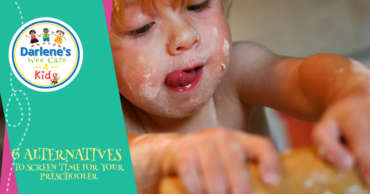
    1. Bake cookies

    Preschoolers are not at the age where they can follow a recipe, but they absolutely love to dump the ingredients in the bowl and stir them up. Talk to them while you’re letting them help bake, explaining what you’re about to do at every step before it happens. Give them a heads up of things they won’t know, like “stir gently so that the dough doesn’t come out of the bowl” or “flour will make a mess if it spills, so dump this carefully.” Your child will most likely love the interaction and attention and aim to please. If you do get a few spills, have a moist paper towel handy and don’t make a big deal of the accident.

    2. Go outside

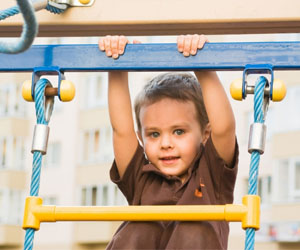
    Whether you can go to your own backyard or a neighborhood park, taking your child outside is crucial for their development. You will be giving your child fresh air and sunshine as well as a whole host of opportunities to build their motor skills, increase their understanding of cause and effect, and improve their imaginations through exploration.

    3. Do puzzles or board games

    Doing simple puzzles together helps your preschooler to develop their problem skills, and playing board games helps to develop social skills like turn-taking, how to handle winning and losing, and patience. Age appropriate activities like these are fun for your child, and they’ll probably ask to repeat them again and again.

    4. Color

    Coloring is a simple activity, but it’s amazing how long a child can remain absorbed in it, especially after you’ve invested a little bit of time in teaching them to color. Provide a little bit of guidance and praise them for the beautiful picture they’ve colored, and you’ll find that coloring can become a staple activity in your repertoire.

    5. Read aloud

    Reading aloud will boost your child’s vocabulary and language comprehension, and it will also teach them vital skills they’ll need in school, such as page turning and holding their attention through the whole story. Try to make it a practice to read aloud to your toddler or preschooler on a daily basis.

    6. Involve them in what you’re doing

    This may be one of the very simplest ways to give your child something to do without derailing yourself from your tasks. Whether you’re folding laundry, dusting, picking up clutter, or doing yard work, give your child an age-appropriate opportunity to help, whether it’s holding two socks or following you with their own personal dust cloth.

    Enroll in Darlene’s Wee Care 4 Kids Today

    For all the times that you can’t be there to give your child hands-on care and attention, enroll them in the daycare center in Upper Darby that cares about their well-being. Contact us today to get started.
  • 5 Nutrition Tips for Toddlers

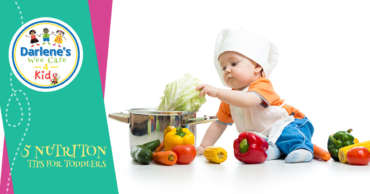
    5 Nutrition Tips for Toddlers

    Getting a toddler to eat is easier said than done. Often, even before a child hits the age of two, they develop strong preferences for foods, and these likes and dislikes can be extremely hard to overcome. However, the value of a nutritious, well-balanced diet can hardly be overstated, and it brings immense benefits to the developing mind and growing body of your young child. Here are a few nutrition-based tips to help your child to get a great start in life.

    1. Introduce foods with a positive attitude

    Toddlers are masters at reading body language, and they are excellent at mimicking or mirroring the nonverbal signals you’re giving off. If you offer your child a broccoli sprout while your facial is a dead giveaway that says, “I bet my kid is not going to like this,” but you offer them a popsicle with a face that says, “Oh, they’ll be excited about this,” your child may reject the healthier snack purely based on what they’re reading from you. When you introduce healthy snacks to your child, try doing it in a way that conveys excitement, delight, and an upbeat attitude. If your facial expression and body language is saying, “This is going to be absolutely magical,” then your excitement may be contagious and your child may end up loving that broccoli or celery.

    2. Limit the availability of junk foods

    When you feed a child who is a picky eater, it’s sometimes hard to get them to eat anything but junk food. One simple method that works for adults might work for your child, too: Just refuse to buy it. If you don’t have it in the house, you can’t succumb to taking the easy way out when they are putting up a fuss over eating healthier options.

    3. Let your child eat with you

    One of the mistakes that parents make is having children eat at a separate table or at separate times from when you’re eating. Like we said, children are masters of imitation, and if your toddler or preschooler sees you eating carrots, they’ll be more likely to want to do it themselves. Your good example can only go so far at getting a young child to eat the right things, but it can play a part.

    4. Don’t overlook the power of play

    Our grandparents’ generation tended to frown on letting children play with their food, but this is how they interact with everything in the world. Watch how your young child explores almost every toy by putting it into their mouth. Why shouldn’t they explore new foods the same way? If you give a child the opportunity to play with the foods they are supposed to eat, they may just unconsciously start tasting them. You can even increase this propensity by playing with the food with your child.

    5. Start at as young an age as possible

    The younger your child is, the more they will have a palate that doesn’t discriminate between different-tasting foods. Introduce them to a wide variety of nutritious treats early. And to make it easier on yourself, don’t introduce them to the things that you’ll have to struggle to limit later on, such as ice cream, soda, and candy.

    We hope these tips have been helpful to you. Choose our preschool in Upper Darby for a day care program that’s fun, affordable, and nurturing to kids of all ages. Contact us today to start the enrollment process.

  • 3 Reasons Boundaries Are Important for Children (And How To Set Them)

    3 Reasons Boundaries Are Important for Children (And How To Set Them)

    Ah, boundaries. Whether the word conjures up a positive or negative image in your mind, the fact is that little children need boundaries and benefit from them. Parenting isn’t easy, and setting proper boundaries is one of the parts that doesn’t always come naturally. However, here at our day care in Upper Darby, we’ve noticed that children tend to thrive when they have healthy boundaries in their life. Here are some of the reasons why it’s important for children to have healthy boundaries, with a few tips on how to set them. Please note that the very youngest children need more boundaries than older ones. As they grow up, their boundaries can (and should) be given a wider girth and scope.

    1. Boundaries make children feel safe.

    There’s something about knowing where the boundaries are that makes children feel safe. If a little child doesn’t know where the boundaries are, they will push and push until they find where the boundaries are. Once a young child knows that a boundary is immovable, they generally tend to stop pushing. However, if a child never encounters where the boundaries are, they experience a vague insecurity that can lead to behavior problems. It’s as if children instinctively know that there should be boundaries.

    2. Boundaries help children to feel that the world is predictable.

    If there is a boundary one minute (“You’re not allowed to do this”) and it’s gone the next (“OK, ok, you can do this after all”), children will develop a theory that the world is unpredictable, and this contributes to insecurity and acting erratically. Adults who always follow through on what they say (with kindness, gentleness, and firmness) can help a child to grow up with a healthy outlook and accurate understanding of the world. We recommend that as a parent, you attempt to be a “solid object” that can’t be ruffled, agitated, or moved by your child’s behavior, as they will push on the boundary to see if it’s solid.

    3. Boundaries help children to interact with others in a healthy way.

    It hurts to be told no or not get your way, even as an adult. However, if a child learns that they can reverse a no and change it into a yes by throwing a temper tantrum, they could potentially learn patterns of interacting with others that are not healthy. These patterns will either have to be dealt with later in life or they will cause damage to your child’s interactions with their future peers, boss, and/or spouse.

    Tips for setting boundaries for young children

    • Setting boundaries (and sticking to them) should never be done in a way that is mean, ugly, or angry.
    • You never actually need to raise your voice in enforcing a boundary. You can calmly remind the child in a kind tone of voice that such and such is not acceptable and redirect their action into the course that they ought to take.
    • Don’t backtrack or go back on your word. This may require you to not say something that you don’t have the authority or ability to enforce.

    Set your child up for success with proper, healthy, wholesome boundaries. They might not thank you now, but they’ll be grateful later. For nurturing, positive day care in Upper Darby, choose Darlene’s Wee Care 4 Kids today. Schedule your tour and enroll your child.

  • 5 Ways That You Can Show Love To Your Child

    5 Ways That You Can Show Love To Your Child

    Sometimes it’s hard to know how to say, “I love you,” to a child. It’s not that you don’t love them—in fact, you love them so dearly that if anything happened to them, you would simply be undone. But knowing how to express that can often be a challenge, especially when you grew up with parents who didn’t know how to express their love to you, either. Children who feel loved often have the most secure and happy emotional development, and having this from a young age will put them ahead and give them a boost for the rest of their lives. Here are some of the ideas from our daycare in Upper Darby on how you can ensure that your kids know that they’re loved.

    1. Express your love with loving physical contact

    As your child’s parent, you can offer your little one a hug, a pat on the back, a hand on the shoulder, a kiss on the cheek, and many other little ways of expressing your love to them. This is one area where if your child doesn’t get it from you, they won’t get it from any other source in life (or if they do, it would be inappropriate). So lavish your affection on your children with loving touch in appropriate moments.

    2. Say, “I love you.”

    There’s no need to be stoic or expect your children to know that you love them by all the other ways you show your love. Some children are more sensitive to loving words than others, but there are many children who need to hear the words, “I love you,” in order for them to feel secure in knowing they are loved. Don’t be sparing with this powerful sentence in your home.

    3. Spend quality time with your child.

    The flip side of saying, “I love you,” is following through with actions. Don’t let your loving words come across as empty or meaningless. Let your child feel loved by the way you spend quality time with them. Whether it’s involving them in baking chocolate chip cookies, taking them to the park, or sitting by their bed for some quiet reading time before you turn out the light, quality time will go a long way to show your child that you love them.

    4. Give your child a gift.

    This is a tricky one, as it can be taken to an extreme where your child expects you to buy anything they see and desire in a store, and you don’t want to go down that road. But a thoughtful or surprising gift that you give to your child can be a special, memorable thing that they will treasure for years to come. This doesn’t have to just happen on birthdays, and it doesn’t have to be expensive.

    5. Serve your child in practical ways.

    It will take a while for your child to appreciate this one, but when they’re older, they’ll realize how every meal you made, every time you did their laundry, and every time you sacrificed what you wanted to do for their sake, you were really silently saying, “I love you.”

    Don’t skimp on making your child feel loved. Giving your child a loving home environment and a positive, nurturing day care environment can go a long way towards giving them a great start in life. Enroll your child in Darlene’s Wee Care 4 Kids today.

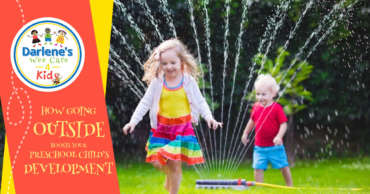
  • How Going Outside Boosts Your Preschool Child’s Development

    How Going Outside Boosts Your Preschool Child’s Development

    Most of us lead indoor lives. We go from the house to the car to the store or the office. The brief moments when we breathe fresh air and feel outdoor temperatures are vastly outweighed by the amount of time we spend in our climate-controlled buildings and cars. We walk on perfectly flat floors, encounter predictable objects, and encounter a relatively low number of unusual things. All this is also true for our children. But going outside boosts your child’s development in ways that you can’t easily get any other way. Here are some of the thoughts from our preschool in Upper Darby on how lots of outside time helps your child’s development.

    Going outside boosts gross and fine motor coordination

    When your child walks on perfectly flat floors all the time indoors, their brains don’t learn about all the micro adjustments that they need to make to keep their balance. Outside, even a flat, grassy lawn has slight bumps and dips. These promote the brain’s ability to integrate the visual information from your child’s eyes with the gross motor muscle movements that they need to make to stay upright. This is even more true when your child is walking on a hill or navigating ground that has large stones.

    Fine motor coordination also happens naturally outside. It takes a lot of fine motor skill to pick a blade of grass, pluck a delicate flower, or pick up a tiny ant. If you see your child doing these things, encourage them! In the preschool years, if they develop the ability to pick up that tiny shiny rock, they’ll be ahead when they get to school and need to hold a pencil.

    Going outside provides sensory development

    When a child is indoors all the time, the only things they encounter are manufactured items. This limits the range of textures, temperatures, and smells that they will have the chance to touch, feel, and smell. Think about the materials that you can find in your home. Wood, plastic, carpet, glass, and metal don’t have the textures that you automatically find when you go outside. Your child needs the sensory development provided by shaggy grass, rough tree bark, gritty sand, a wet dog’s nose, and all the other things they’ll find outside.

    Going outside promotes your child’s imagination

    Have you ever watched a child pick up a stick and play with it endlessly, while that battery-powered singing toy only holds their attention for two seconds? What is it about the simple things you find outdoors that children love? Whatever it is, playing with a simple thing like a stick means that your child is using their imagination to make the object interesting. Developing your child’s imagination will help them all through their lives, increase their problem-solving ability, and improve their ability to play independently.

    If you’re not in the regular habit of taking your kids outside, why not start? Their brains will love it!

    Enroll in Darlene’s Wee Care 4 Kids

    Here at Darlene’s Wee Care 4 Kids, we believe in stimulating children in all the areas of their educational and physical development. Learn more about our day care and enroll your child today.

  • How Exploration and Discovery Build Your Child’s Knowledge Faster

    How Exploration and Discovery Build Your Child’s Knowledge Faster

    Building your young child’s knowledge about the world is serious business when they are tiny. They are like precious little blank slates, willing and ready to absorb anything that you impart to them, and it’s a big responsibility to impart the right things at the right time. On the one hand, you can’t cram them full of things they’re not ready to understand. If you try, you’ll quickly find that they either shut down, get bored, or start getting wild and wiggly. On the other hand, you don’t want to just leave it to chance that they will learn the things that they need to know. So how do you maximize the speed that you can build their knowledge and get it to stick?

    The answer is in designing experiences for your preschooler so that they will learn by exploring and discovering things for themselves. If you make the learning process into an adventure, the knowledge will stick and become part of their bank of experiences from which they will draw in building future knowledge.

    Here’s an example:

    Let’s say that you read a banana bread recipe to your preschooler.

    Can you even imagine them listening all the way through to the end? You’ll probably even bore yourself.

    However, this is how too many academic environments handle the impartation of knowledge. “I’ll tell you these things, you listen, and then I’ll expect you to be able to act on that information.”

    A child won’t be able to make banana bread from that kind of instruction.

    However, what if you take a different approach?

    You let the child pull up a stool to the counter. You pull out all the ingredients you’ll be using and line them up in a row in the order that you’ll add them to the recipe. You talk about their names and let the child look at them all.

    Then you allow the child to help by scooping, dumping, and mixing the ingredients, at your direction.

    This process of exploration and discovery will show your little one many things.

    • If I stir too fast, the flour will go everywhere! Oops!
    • Cracking eggs and making them land in the right place is tricky business. And raw egg is slippery.
    • When I touch the batter, my hands will get sticky and I’ll be tempted to wipe them on my shirt. I should wipe them on a rag or paper towel instead.
    • I can do this! I was helpful!


    Here at Darlene’s Wee Care 4 Kids, we make it a priority to give your child the opportunity to learn by exploration and discovery. We want their educational experience at our daycare to be enriching, fun, and beneficial. Enroll your child today!