Tag: daycare center

  • How to Protect Your Children From Illness

    How to Protect Your Children From Illness

    Let’s face it, getting sick is inevitable. As humans, we are the perfect host for a variety of microbes, and as social creatures, we are bound to pass them from one person to another. Add to that the expectation to go, go, go, and the delayed onset of symptoms for many diseases, and you’ve got yourself the perfect storm for an outbreak. 2020 has served as an eye-opener for many people who weren’t well versed in disease transmission and the importance of taking illness seriously. As the coronavirus pandemic rages on, we are once again entering flu season as well. So, we thought it would be a good idea to take a moment to discuss how to keep your children healthy this autumn.

    Be a Shining Example

    Children learn best by following examples of those they see around them. To help reduce the likelihood of your child getting sick, be a good health role model! Begin with the basics like washing your hands frequently, and requiring your child to do so as well – before and after meals, after using the bathroom, when they are visibly soiled, and after touching shared surfaces. Always cough and sneeze into your elbow and stay home when you aren’t feeling well. When you set the example, it isn’t just your children who will pick up on your good habits, but other children and adults around you will likely follow suit. If you’ve ever heard the term herd immunity, it refers to the majority of people in your circle being healthy enough to keep those who are at risk protected. Behind your own nuclear family, be the shining example of health for your entire herd!

    Clean Regularly and Clean Again!

    Germs and germ exposure is great for building healthy immune systems. However, recklessly exposing ourselves and our children to unnecessary microbes can be incredibly harmful. To reduce the number of germs we come in contact with, clean, clean, and clean again. We’ve already mentioned hand washing, which is a great start. You should also regularly wash commonly touched surfaces including your smartphone, door handles, and countertops. Be sure to follow the instructions on the product container to ensure you are completely sanitizing the area. Wash your children’s toys, shoes, and car seat regularly, along with frequent laundering of clothing and bedding and several baths a week. Cleaning ensures that microbes you’ve collected are washed away and don’t multiply. It also reduces the chances that you could pick something up and get sick or pass it along to a family member.

    Stay Home When You’re Sick

    Somehow over the last decade or so, it has become a symbol of strength and loyalty to push through feeling ill or being in pain to work. Those who take the day off to nurse their fever from the safety of their home are chastised for being lazy or making things up, while those who work through an illness or injury are valued as having a strong work ethic. We could not disagree more. Staying home when you are sick shows loyalty and respect for those around you by choosing to keep your disease or infection to yourself. If you can work from home, we recommend that option, and, when you can’t, just take the day off to protect those around you.

    Other Things You Can Do

    Other things you can do to protect your children from getting sick include:

    • Get immunized
    • Avoid touching your face
    • Avoid contact with those who are sick
    • Prevent children from putting community toys in their mouth
    • Get regular checkups
    • Finish prescribed medications

    Choose a Daycare That Cares

    At Darlene’s Wee Care 4 Kids, we know that quality child care is important to maintaining your work schedule to provide for your family. More than keeping your children entertained while you are away, we are committed to keeping the minds and body healthy and nourished. Our staff is dedicated to keeping a clean facility while monitoring our kids for any sign of a contagious disease. We have recently installed thermal scanners to check the temperatures of everyone entering the building and have limited those allowed inside to the children we are watching. For more information about our safety procedures or to get your child enrolled, connect with us online today.

  • How to Choose A Special Needs Child Care Facility

    How to Choose A Special Needs Child Care Facility

    It can be difficult to find reliable and quality child care in general, but the process is even more challenging for parents with a special needs child. When choosing a special needs care facility, parents must be assured they are making the best decision for their beloved child and their unique needs.

    At Darlene’s Wee Care 4 Kids, we welcome and value all children, including those with special needs. On a fundamental level, every child needs the same things: play, education, and support. 

    In this article, we’ll give you all the information necessary to feel assured that our daycare facility provides the best care and curriculum for special needs children in the Upper Darby area. 

    Who We Are

    Darlene’s Wee Care 4 Kids is the top-rated provider of childcare services for special needs kids in Pennsylvania. All of our staff are dedicated to nurturing and cherishing each and every child that walks (or crawls) through our doors. Regardless of whether a special needs child needs assistance with visual impairment, autism, a physical injury, or something else, we have the well-trained and compassionate staff needed to get the job done in a caring and effective way. 

    Children with deafness or hearing problems will have no trouble at Darlene’s, as one of our best teachers is trained fluently in American Sign Language and belongs to the Deaf community herself. 

    Kiddos with a developmental disability like autism might be nervous too, but there’s no need for this. All of our staff share a history of working closely with special needs children. They possess a strong understanding of special needs conditions and know how to communicate with your child in a way that makes them feel safe, heard, and respected.

    Our Special Needs Child Care Philosophy

    We believe that special needs programs are a group effort; they work best when everyone cooperates and works together. That means inclusivity and diversity in the classroom, as this encourages children to truly be themselves and to grow at their own pace. 

    Children struggling with developmental or educational delays (dyslexia, for one) should feel welcomed and excited to be included and engaged in our high-quality curriculum. Each child enrolled in our daycare program will receive a curriculum specifically tailored to their unique learning and developmental needs. Elements of their personalized curriculum, depending on their condition and abilities, may include language skill development, physical ability training, group play, dietary modifications, and a wide variety of sensory stimuli to get their creative juices flowing. 

    Parents often tell us that their children have such a great time at Darlene’s that it can occasionally be difficult to get them to come home! We think that’s a pretty good problem to have, if ever there was one. 

    Conclusion

    Darlene’s Wee Care 4 Kids is proud to serve a wide range of children with unique and individualized needs. We never shy away from a challenge, and we’ll share that same beneficial philosophy with your beloved little ones. Call today to learn more about our special needs child care programs and summer camps!

  • How to Get Involved With Your Child’s Care

    How to Get Involved With Your Child’s Care

    As a working parent, you fret about your child’s wellbeing while you can’t be with them and wonder how they are doing without you. Very few parents simply trust a babysitter or a daycare to simply hand their child over to without doing some investigating. And, most working parents feel guilty about being so disconnected from their child’s care for the majority of the week. At Darlene’s Wee Care 4 Kids, we understand this and we want to help our kid’s parents be a little more involved in their child’s care, even when they are with us.

    Take advantage of our open visit policy to drop in and say hello to your child.

    We understand that this may not be practical for all parents, but if you work close, feel free to stop by on your lunch breaks. Or, if you have an appointment or offsite engagement one day, stop in and say hello, even if it’s just for a few minutes. It will help put you at ease just dropping in randomly to see that your child is doing well and your child will be overjoyed to show you all the things they do all day!

    Get involved with parent committees.

    Even if you can’t be involved in person, keeping up on parent communities can help establish relationships with fellow parents and help you feel more involved. Making friends with other parents in your child’s care circle can help build your network and offer opportunities for social engagements. Establish relationships with other parents and children to build your family.

    Follow us on social media and interact with our community.

    In a digital age, social media makes it easier to stay engaged with people and feel a part of a community. When you follow us on social media, you can get updates even when you aren’t at our facility and feel more included. Read our newsletters, emails, and updates to stay connected.

    Volunteer your spare time — attend meetings or be a field trip chaperone.

    We offer plenty of volunteer and chaperone opportunities and welcome parents to take the chance to get to know our staff and explore new sights with their children and the other kids in our care.

    Attend our events.

    Our staff offers plenty of events for parents and kids to attend. From holiday parties to presentations by the kids, you are sure to be able to find one that fits your schedule.

    Talk with the staff at drop-off and pick-up.

    The staff at Darlene’s Wee Care 4 Kids are happy to get to know the parents of our kids and share their daytime experiences at pickup and dropoff. We fully understand that some days you will be in a rush and others you are just ready to see your kiddos, but when you have time, don’t hesitate to hang out a bit and get to know the keepers of your kids!

    Follow-up with your kids at home.

    Our care is an extension of your care. Follow-up with your children at home by asking them questions about their day and engaging in play or reinforcing what they learned at daycare. You can even plan complementary activities at home.

    At Darlene’s Wee Care 4 Kids, we want the parents of our children to be as involved as possible in their child’s care. We understand that for many children, they may spend more time with us in a workweek than at home with their families. It is important to us that we become an extension of your family and that you feel as included as possible. For more ideas on how to be more involved in your child’s care, contact us.

  • Tips for Communicating with a Nonverbal Autistic Child: Part Two

    Tips for Communicating with a Nonverbal Autistic Child: Part Two

    We recently took a look at some ways that you can encourage communication for a nonverbal autistic child. In that post, we discussed how play, social interaction, imitation of your child’s sounds and behaviors, nonverbal communication cues, and giving them enough room to respond can help the development of communication skills. Today, we’ll be completing this two-part look at how you can help develop your child’s communication skills. If you’re in need of childcare for your special needs child, call Darlene’s Wee Care 4 Kids.

    -Simplify Your Communication

    When you make your vocabulary minimal and simplified, it not only makes it easier for your child to understand, it also makes it easier for them to imitate that speech. If your child is nonverbal, keep it to single words (i.e. if they’re playing with a ball, say “ball” or “roll”). If they have begun to speak in single words, you can increase it to a short, two-word phrase (i.e. “throw ball” or “roll ball”). Keep the “one-up” rule in mind, where you use phrases with one more word than they are using. As they gain understanding, they’ll pick more words and phrases up and their communication skills can develop.

    -Follow What They’re Interested In

    Instead of steering your child’s focus away from something that has their interest, follow along by narrating their actions. Stick to the “one-up” rule with this as you describe their actions. The verbalization of what they’re doing allows them to make the connection to their actions with their corresponding names. Learning the vocabulary associated with something they enjoy and are interested in allows them to make connections easier than if they are presented with new actions and words all at once. That can cause them to retreat inwards, avoiding communication and interaction on the whole.

    -Consider Devices and Visual Supports

    There are many types of devices and visual supports available that can help facilitate communication while fostering the development of speech skills. For example, there are some devices and apps with pictures that produce words when your child touches them. Not only does that help a nonverbal child communicate, having a visual representation of the word they are attempting to say, combined with the audio of the word playing in direct connection to them, it can help them learn the vocabulary and how to vocalize what they are hoping to say.

    While the strategies we’ve discussed in this two-part series have been successful for many parents with nonverbal and/or autistic children, it’s important to remember that every child is different. Something that may be successful for one person might not land with your child. Discuss with your child’s therapist strategies you’ve tried, what they connect with, and what they reject. They’ll be able to provide further advice depending on what is successful and what difficulties your child may be encountering. While it is a difficult situation, it’s vital to show patience to allow your child to develop at their own pace.

    If you are in the Upper Darby area and you’re looking for childcare for your special needs child, call Darlene’s Wee Care 4 Kids. We’re here to help!

  • Tips for Communicating with a Nonverbal Autistic Child: Part One

    Tips for Communicating with a Nonverbal Autistic Child: Part One

    Communicating with children can be a difficult task on its own, but it becomes even tougher with a nonverbal autistic child. However, it is possible to not only find ways to effectively communicate with them, you can also help them develop their verbal skills in a way that is comfortable to them. With that being said, it’s important to remember not all autistic children are the same. While one strategy may work perfectly for one situation, that’s not to say it will be right for another. In hopes of improving communication skills, we have put together this list of ways you can help a nonverbal autistic child communicate. If you are in need of childcare that doesn’t leave behind children with special needs, call Darlene’s Wee Care 4 Kids.

    -Play and Social Interaction

    Much of any child’s education comes as a product of playing, including learning language and communication skills. Find games that your child enjoys playing to engage them. Include activities that encourage social interaction, such as singing and reciting nursery rhymes. While you’re interacting with your child, keep yourself in front of them and close to eye level, as that will make it easier for them to see and hear you.

    -Mimic Your Child

    Pay attention to the sounds and behaviors your child makes while interacting. You can help them be more vocal by imitating the sounds they make, while encouraging them to copy you and take turns going back and forth with sounds. Only imitate their behavior when it is a positive action. For instance, if they roll a toy car, you roll yours as well. But, if they throw their car, don’t follow suit. This is an opportunity to show them good behavior first hand.

    -Nonverbal Communication

    Small things like gestures and eye contact can help an autistic child form the foundation for future language and communication skills. Exaggerate your gestures to get your communicate your feelings to them. Use your voice and body while communicating, such as extending your hand and saying the word “look”. Observe your child’s gestures and respond to them in kind. When they see you communicating like this, they will be more likely to use this technique to communicate with you and others.

    -Give Them Space to Talk

    When talking to your child, it is easy to feel like you need to help them along when they don’t respond right away. This can make them more shy about answering since they feel like you’ll answer for them. When you ask them a question, give them ample time to answer while watching expectantly. Keep an eye out for any sounds they make or nonverbal gestures, as this may be the only way they can respond at that time. Then, respond to that gesture promptly to help them establish the flow of communication.

    That wraps up part one of our look at some ways you can help a nonverbal autistic child communicate. We’ll be diving into part two in a couple of weeks, but we hope these strategies help you with your little one. If you’re looking for childcare services in Upper Darby that will give your special needs child the attention and care they deserve, call Darlene’s Wee Care 4 Kids. We’re here to help!

  • 6 Educational Toys That Will Reinforce Learning At Home

    6 Educational Toys That Will Reinforce Learning At Home

    If you’re a parent, you’re probably tired of picking up toys. You’re probably also tired of seeing how quickly your child gets bored with their toys. When a toy is new, they’re fascinated for about 5 minutes, and suddenly, it’s old. What’s up with that? Maybe you’re even suspicious of buying toys at all because you just figure they’ll be one more thing to clutter up your space. The fact is, children benefit from free play (including with toys), but some toys bring more learning benefits than others. Here are a few suggestions for educational toys for preschoolers. Maybe you’ll want to put one or more of these onto your wish list for your child’s next birthday.

    1. Counting Bears

    Sets of counting bears are beloved in classrooms everywhere because of the number of ways that you can use them for developing a child’s math skills. Counting bears come in several different colors, so they can be used for patterns and sorting in addition to counting. Plus, since your child will probably encounter these bears at preschool, they’ll know what to do with them and will have even more fun with them at home.

    2. Pattern Blocks

    Pattern blocks are blocks that come in geometric shapes that are cut to precise sizes so that their edges are the same length. Your child can rearrange them to create an endless variety of pleasing patterns, and they’ll also begin to get familiar with their shapes. One of the great things about most pattern block sets is that they paint each shape one consistent color (for instance, all the triangles might be green). This provides an extra measure of reinforcement to help your child learn the names of all the shapes.

    3. Star Builders

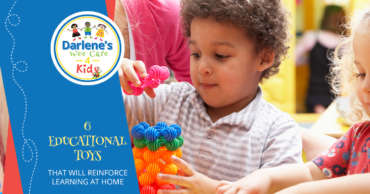
    Star builders are chunky blocks that look sort of like a 6-sided asterisk (*). With their larger size and interlocking ability, they are easy for little hands to manipulate. Your preschool child will be able to link them together to create shapes, chains, and towers, developing their motor skills and their spatial awareness.

    4. Finger Puppets

    Finger puppets (or even full-size puppets) are wonderful toys to boost your child’s imagination. Get your child started with what to do by acting out a mini-drama with finger puppets on your own hands, and let them interact and take the story wherever their imagination leads. Prepare to be amused (and amazed!) at the off-the-wall story plots your preschool child can come up with.

    5. Linking Cubes

    Linking cubes are little interlocking cubes of different colors that you can use to teach math concepts to young children. When you hear “math,” though, don’t mistake these linking cubes for “boring.” These simple cubes can engage your child’s attention for hours, and in the process, they’ll be learning skills from counting to constructing 3D shapes to developing an awareness of patterns.

    6. Dominoes

    Dominoes are another great toy for kids, and this is especially true if you get a well-made set that’s made slightly larger (to reduce the risk of choking in case they get put in mouths). Or, try the game of Quirkle for a fun alternative to dominoes that the whole family will enjoy.

    Sign up for preschool day care at Darlene’s Wee Care 4 Kids

    When you enroll your child in our day care in Upper Darby, you know that your child will be instructed, nurtured, and cared for. Start the enrollment process by contacting us today!